
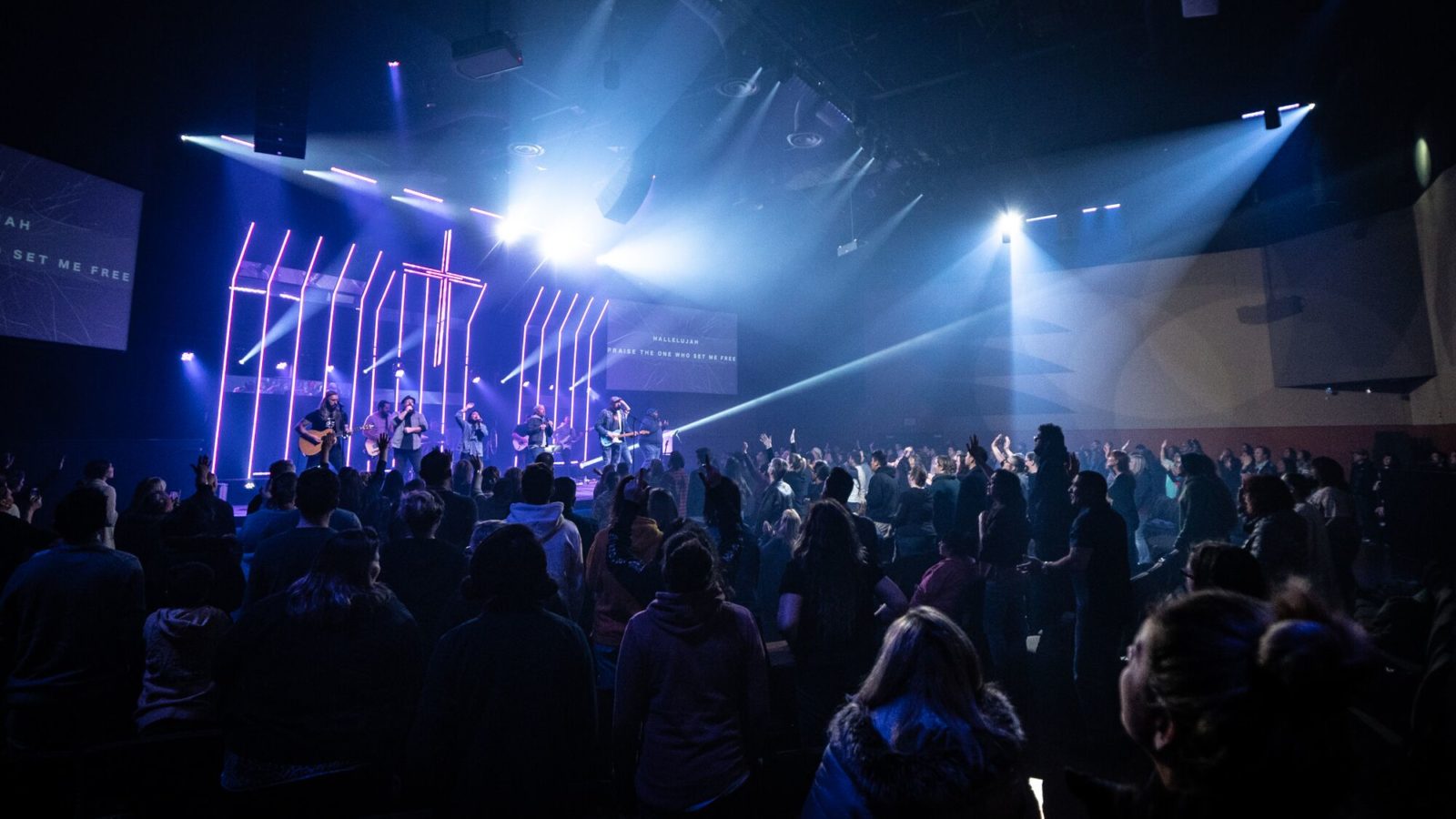

The first Sunday I drove to church after my pastor asked me to step off the worship team for a couple of months, I had a worship song on in the car and I caught myself doing the thing I always do. Listening with a lens on. Is this one singable? Could we cut the bridge? Would this work in our room? Then I remembered I was not planning anything. He had told me, plainly, that he did not even want me thinking about it. And I sat in that car not knowing how to just worship.
That is where a lot of us begin. Not at the bottom, but on the other side of it, trying to figure out how to come back. If you have hit the wall, this piece is about worship leader burnout recovery. Not the part where everything falls apart, but the part where you start to put weight back on the leg you have been favoring. It is slower than you want. It is also more hopeful than you have been told.
Before you read another word, if you are not sure where you actually stand right now, take the free 5-minute self-check. It will not diagnose you. It will give you language for what is going on, which is most of the first step.
Burnout is not the end of your calling
I was raised on a framing that nearly buried me. If you were burnt out, you were not abiding correctly. You were not drawing from the Lord well. You were running on your own strength, because if you were doing it for Jesus you would not be tired. When The Loneliest Job in the Church Building went out, that exact argument showed up in the comments. If you are burnt out, the thinking went, wake up earlier, pray longer, read more. It is always time. More minutes with the Lord and the strength will come.
I can find verses that back that up. We will rise on wings like eagles. My strength rises when I wait on the Lord. But Paul, who abided in Christ as well as anyone in church history, wrote that he was pressed on every side, burdened beyond his strength, despaired even of life. The abiding and the cost coexist. They always have. Weariness is not automatically a verdict on your soul. Sometimes it is just the honest result of carrying too much, for too long, with no one carrying it with you.
So here is the first thing I want you to hold onto as you start your worship leader burnout recovery. Hitting the wall did not disqualify you. It revealed a load. The goal of coming back is not to prove you can carry that same load again. The goal is to come back differently.
And many do. I have watched leaders walk back onto the platform after a season away and lead more freely than they ever did before they crashed. Not because the burnout was a gift, but because the recovery taught them something the busyness never could.
What worship leader burnout recovery actually looks like
Recovering from worship ministry burnout is not a switch. There is no single Sunday where you walk in healed. It looks more like a few overlapping shifts that happen slowly, often out of order, sometimes two steps forward and one back.
1. You stop white-knuckling it
You cannot work your way out of isolation, and you cannot grind your way out of burnout. The instinct, especially for the kind of person who ends up leading worship, is to try harder. Recovery starts the moment you admit that harder is the thing that put you here.
2. You get honest with one real person
Not the whole church. One person. A peer who knows the role from the inside, ideally someone outside your own building. We get ourselves stuck trying to pull all of our energy and guidance from our direct report, the executive pastor or the senior pastor, and that is a burden they cannot wear for us because they are carrying their own. You need community that is not also your workplace.
3. You let the role come off, on purpose
The healthiest worship leaders I know can step off the platform without the world ending. If you cannot come off the platform at least once a month, that is a warning sign in itself. Part of coming back is building the structure that lets you step away, which we will get to.
4. You separate who you are from what you do
This is the deep one, and it is the work of the rest of this article.
None of these happen on a tidy timeline. Survey after survey, worship leaders name the same struggle in their own words: “finding balance and not getting burned out,” “learning to serve from a place of rest and overflow,” “I have experienced burn out more than once and don’t want to go through it again.” If that last one is you, you are not failing at recovery. You are exactly the person recovery was made for.
Coming back from burnout means leading from rest, not from need
Here is what I did not understand for most of my ministry. I was leading out of need. I needed the platform. I needed to be the one who set up the clicks and the slides and ran the team, because if I was needed, I was safe. The work fed something in me that had nothing to do with worship.
Coming back from burnout is mostly about reversing that. Leading from rest instead of from need. And the hard truth is you cannot lead from rest if you have not actually rested. This is where the structural stuff matters more than the spiritual platitudes.
One of the most clarifying exercises I have ever done with a team is auditing our time. Literally writing down how many hours go where. Every time, two things surface. You are not working as much as you think on the things that actually matter, and you are pouring way too much time into things that do not. If you are rebuilding after burnout, do this before you say yes to anything. Put your week on paper and look at it without flinching.
The other gauge is the people who live with you. You often cannot see burnout from the inside, so you have to see it through the eyes of others. Ask your spouse how the balance seems. Ask your kids what they think about your job. My co-host Chris tells the story of a friend whose kid said, plainly, “Dad, I liked your old job better.” That is deep. That is the kind of sentence that should stop you. If you are coming back, let the people closest to you tell you when you are sliding back toward the wall.
Rest is not a reward you earn after the season calms down. It is the soil you lead from. A worship leader in our community put it better than I could: “When you come in knowing your well is dry, but surrender it all to God and He fills you up before a worship song even finishes.” That is leading from overflow instead of from empty. That is the whole point.
Rebuilding the rhythms that keep you standing
If burnout is what happens when there is no balance, then recovery is not a mood, it is a set of rhythms you rebuild on purpose. Three of them carry most of the weight.
Sabbath, the real kind
Not a day off where you answer texts about Sunday. An actual stop. Chris tells a story I think about often. Years ago a family in his church handed him a gift card for a hotel forty-five minutes away and told him to take his wife for a weekend. He was sure he could not use it. He had to be at church on the weekend. They kept asking, then they started asking his wife, and finally his pastor pushed him out the door. When he got there he realized he had not taken a weekend off in something like a decade. Pulling back even a little woke him up to how deep he had gotten.
You may not have a decade of momentum to undo. You may. Either way, sabbath in recovery is non-negotiable, and at first it will feel almost impossible to do. Do it anyway. The discomfort is information.
Your devotional life, unhooked from the platform
When you lead worship for a living, your spiritual life and your job get welded together. You stop having quiet times and start having prep. The fix is not more discipline, it is unhooking. I had to make a conscious decision to actually worship God in the car while I was listening to the latest song, instead of asking whether we could use it. Coming back means rebuilding a devotional life that exists whether or not you are scheduled on Sunday. If you want help with that, our worship devotionals are built for exactly this. Short, weekly, made to make worship more than singing.
One honest peer
I will say it again because it is the rhythm most leaders skip. One person you can be unguarded with. The survey answers are full of people naming this absence: “I feel like I’m not spiritually being poured into by anyone, even though I am spiritually pouring out.” The remedy is not a bigger network. It is one honest relationship. Build it deliberately.
- Sabbath: one true stop a week, plus permission to come off the platform at least once a month.
- Devotional life: a worship and prayer rhythm that has nothing to do with what you are leading Sunday.
- One honest peer: a single person, ideally outside your church, who gets the role from the inside.
None of these are heroic. That is the point. Recovery is built out of small, boring, repeatable things, not one dramatic breakthrough.
Reframing your identity: formed before God, not before the audience
In 2015 we started this whole thing with a tagline. Who you are is more important than what you do. Eleven years later I had to admit out loud that 2015 me did not live that. He would have said it. It was catchy. It would look great stitched on a pillow. But he did not function like it, because he was too busy proving himself, launching things, feeling good about gathering people.
Here is what burnout exposes. The role and the identity fuse, slowly, until every wobble in the role becomes a wobble in you. When that has happened, even a kind word can feel like a threat. A few months ago my pastor sat me down and said he would love for me to take a couple of months off the team. In the second between him saying it and me answering, my brain went straight to, “Uh-oh. What did I do? Where is this going?” I trusted him completely. There was nothing underneath it. He jumped in fast, said, whoa, this is not that, he was on sabbatical himself and wanted to model it with me because he had watched how hard I had been digging in for years. But my identity was thrashed before he could finish the sentence. That is what role-identity fusion does. It makes rest feel like rejection.
Recovery is the slow work of un-fusing. Of being formed before God instead of before the audience. The audience, the platform, the room, even the affirmation, none of that is where your name comes from. The leaders in our community feel this in their bones. They name the pull toward “comparison to other ministers, ministries,” the “pressure I put on myself to get it right,” the ache of “feeling like I’m enough or being an effective leader.” Every one of those is the audience trying to hand you an identity that is not yours.
You do not need two months off to start un-fusing. Maybe you do, and you should talk to your pastor about it. But often the first step is just saying it out loud. I have been drawing my identity from what I do. Naming it is most of the battle. The one who meets you when you finally name it is not a stranger to the role. We have a high priest who was tempted in every way, who knows the platform and the booth from the inside. He is not unimpressed with your tiredness. He has been there.
Recovery is slow, and that is okay
I will be honest about my own timeline. I am probably still not all the way there, and I am already back to planning worship. The car ride where I had to consciously choose to worship instead of evaluate did not fix itself in a week. It is a muscle I am still rebuilding.
If you are coming back, set your expectations accordingly. Recovering from worship ministry burnout is not a thirty-day program. It is a season, and seasons move at their own pace. A few honest expectations to hold:
- You will have setbacks. A hard Sunday or a tense conversation with a leader can drop you right back into the old patterns. That is normal. It is not proof you failed.
- The hard parts do not vanish. The understaffed roster, the senior pastor who wants a full band, the volunteer load. Those structural pressures are still there. Recovery does not erase them. It changes how much of yourself you hand to them.
- Some weeks you lead with a heavy heart. Survey respondents named it directly. One of the hardest things in ministry is “showing up and leading worship even when my heart is heavy.” Coming back does not mean you only lead from full. It means you have rhythms underneath you for the weeks you are not.
- Slow is not the same as stuck. The farmer who plants the acorn never sits in the shade of the oak. You may not feel the progress while it is happening. Keep watering anyway.
The one thing that will sabotage your recovery faster than anything is comparing your pace to a version of yourself that did not have boundaries. That old version was not healthier. He was just unaware. The awareness you have now is the asset, not the weakness.
Many leaders come back more free than before
This is the part I most want you to hear, because the burnout narrative almost never gets here. Plenty of worship leaders come back leading more freely than they ever did. Not in spite of the wall. Because of what the wall finally forced them to learn.
I have sat with leaders at our conferences who took the workshop on coming off the platform and left in tears, not because they were sad, but because no one had ever told them there was a way out. They had been stuck so long they thought stuck was the job. When they finally rebuilt the team, trained someone to take their place, and stepped off for a Sunday, the church did not collapse. It worshiped. And when they came back, they led without the death grip.
The freedom on the other side looks like this. You lead because you want to, not because you are afraid of who you are without it. You can take a Sunday in the crowd and worship like everyone else. You can let the drummer take a break without spiraling about your roster, because the people on your team finally matter more to you than a full platform. You worship in the car with no lens on. The same work that was crushing you becomes, slowly, a joy again.
One survey answer holds the whole thing. The favorite part of ministry, one leader wrote, is “when you stop trying to do everything in your own strength, rest in God’s assurance, and the congregation sings out in worship.” That is not a description of someone who never struggled. That is a description of someone who came back.
If you are at the start of that road, the next right step is small. Take the free 5-minute self-check and get honest about where you actually are. Then pick one rhythm from this article and rebuild it this week. Just one.
A quiet word before you go
This article is not a clinical diagnosis, and the self-check is not therapy. Burnout and depression can overlap, and sometimes what feels like weariness needs a doctor or a counselor, not just a sabbath. There is no shame in that. If you are in crisis, or you are having thoughts of harming yourself, please reach out today. In the US you can call or text 988 to reach the Suicide and Crisis Lifeline, any hour, any day. You are not a burden, and you are not alone in this. Tell one real person, and let them help you take the next step.
Worship leader burnout recovery FAQ
How long does worship leader burnout recovery take?
There is no fixed timeline. For some it is a few months, for others it is a full year or more, and most people move forward unevenly with setbacks along the way. The honest answer is that recovery is a season, not a program. What matters more than speed is whether you are rebuilding real rhythms (sabbath, a devotional life, one honest peer) rather than just waiting to feel better.
How do I know if I am actually burnt out or just tired?
Tired tends to lift after rest. Burnout does not. If you have taken time off and still feel depleted, cynical, or detached from work you used to love, it is likely more than tired. The clearest tell is whether you can step away at all. If the thought of missing a Sunday feels impossible, that is a sign. The free self-check can give you language for where you land, and our deeper guide on what to do when you realize you are burnt out walks through the next moves.
Should I quit worship ministry if I am burnt out?
Usually not as a first move. Burnout is often a load problem and a structure problem more than a calling problem. Before you decide your future, get rest, audit your time, have an honest conversation with your leader, and see how you feel from a steadier baseline. Some leaders do need to step away from a specific role or church. Many more simply need to come back differently, with boundaries they never had before.
How do I talk to my senior pastor about coming back differently?
Start by making sure your leader actually knows your life, your family, your limits, not just your role. Then talk openly and early, before resentment builds. Name what you need (a lighter roster, time off the platform, help training someone to share the load) and frame it around serving the church well long-term, not just protecting yourself. The relationship is the foundation. You cannot negotiate boundaries with a leader who does not really know you.
Can I lead worship again after burnout without it happening again?
Yes, and many leaders do, often leading more freely than before. The protection is not willpower, it is structure. Build the ability to come off the platform regularly, keep a devotional life that is separate from your job, and keep one honest peer in your corner. Burnout returns when balance disappears, so the work is keeping balance in place on purpose, not hoping it holds.
What if I keep sliding back into old patterns?
That is normal, not failure. The most dangerous place is being unaware of the slide. The fact that you notice it is exactly what keeps you from getting buried again. When you catch yourself over-committing or gripping the role too tightly, name it out loud, go back to your time audit, and lean on the person who knows your story. Awareness plus one honest relationship will catch you most of the time.
For the full picture of worship leader burnout, start with our pillar guide: Are You Burnt Out as a Worship Leader? Take the Free 5-Minute Self-Check. And whenever you are ready to lead from rest again, the worship devotionals are here to walk with you.
 What to Do When You Realize You’re Burnt Out as a Worship Leader